 Ashley Thiesen · 7 min read
I haven’t stopped thinking about Taylor Swift’s new song “Babylon” since I first heard it.
Yes, I’ve been a Swiftie since 2007, when I saw her open for George Strait at the Pepsi Center. In 2015, I took my stepdaughters to the 1989 tour. Glowing wristbands and all.

So I’ve been listening for a long time. But this one hit differently.
Not because I think every Taylor Swift song is secretly a psychological case study. And not because I care who it’s “really” about.
I’m interested in what the song reveals about something I see all the time in my subconscious work:
What happens when you spend so long chasing the life you think you’re supposed to want that you lose touch with the life you actually want?
That, to me, is the fog. (If you’re new here, the fog is something I write about a lot. Start with Clearing the Fog.)
What “Babylon” is about
“Babylon,” the final track on The Life of a Showgirl: The Encore, tells the story of someone who leaves a smaller, more ordinary life behind in pursuit of something bigger. More money. More status. More freedom. More excitement. More proof that he’s made it.
And eventually, he realizes what he was chasing may not have been what he thought it was. (ELLE has a great breakdown of the lyrics.)
That realization is brutal.
Because sometimes the hardest thing to admit isn’t I failed. It’s:
I got what I thought I wanted. And I still don’t feel like myself.
If you haven’t heard it yet, here it is.

The fog makes the next thing look like the answer
There’s a line in the song about the neighbor’s lawn always looking better.
That idea is so simple, but it gets at something much deeper.
We are constantly being handed messages about what “better” looks like.
A bigger house.
A more successful business.
More followers. More money.
A busier calendar. A more impressive title.
The relationship that looks good from the outside.
The vacation. The body. The lifestyle.
The next milestone.
And there’s nothing inherently wrong with wanting any of those things.
The problem is when we stop asking ourselves why we want them.
Because sometimes the goal you’re chasing is genuinely yours. And sometimes it was handed to you so gradually that you never thought to question it.
You just assumed.
This is what successful people do.
This is what a good mother does.
This is what a successful business owner should want.
This is what freedom looks like.
This is where I’m supposed to be by now.
And because the belief is running underneath the surface, you may not even experience it as a belief.
It just feels like reality.
You can be incredibly successful inside the wrong programming
This is one of the things I find most fascinating about subconscious beliefs.
You don’t have to be stuck to be in the fog.
You can be highly functional. Successful. Productive. Admired. You can have the beautiful house, the thriving business, the impressive résumé, the relationship everyone thinks you should be grateful for.
And still have a quiet sense that something isn’t right.
Sometimes we assume that if we’re unhappy, we need a new goal. But what if the problem isn’t the goal?
What if it’s the belief underneath it?
Maybe somewhere along the way you learned that being valuable meant being productive. Or that success meant making more. Or that visibility meant proving yourself. Or that rest was something you earned after everything else was done. Or that wanting something different meant you were ungrateful for what you already had.
Those limiting beliefs can become incredibly powerful.
Not because they’re necessarily true. Because they’re familiar.
And familiar can feel a lot like safe.
The ladder that never ends
This is where “Babylon” gets really interesting to me.
The character in the song isn’t simply chasing money. He’s chasing an identity. He’s climbing. He’s moving. He’s becoming someone.
And somewhere along the way, love becomes “ice upon the ladder” he’s trying to climb.
That image stopped me.
Because how often do we unknowingly turn our own lives into ladders?
We put relationships, creativity, family, health, play, peace, even ourselves on hold because we’re convinced we’ll get to those things after we arrive.
After the launch.
After the next six figures.
After the house.
After the business grows.
After we prove ourselves.
After we become the person we think we need to become.
Except there is always another rung.
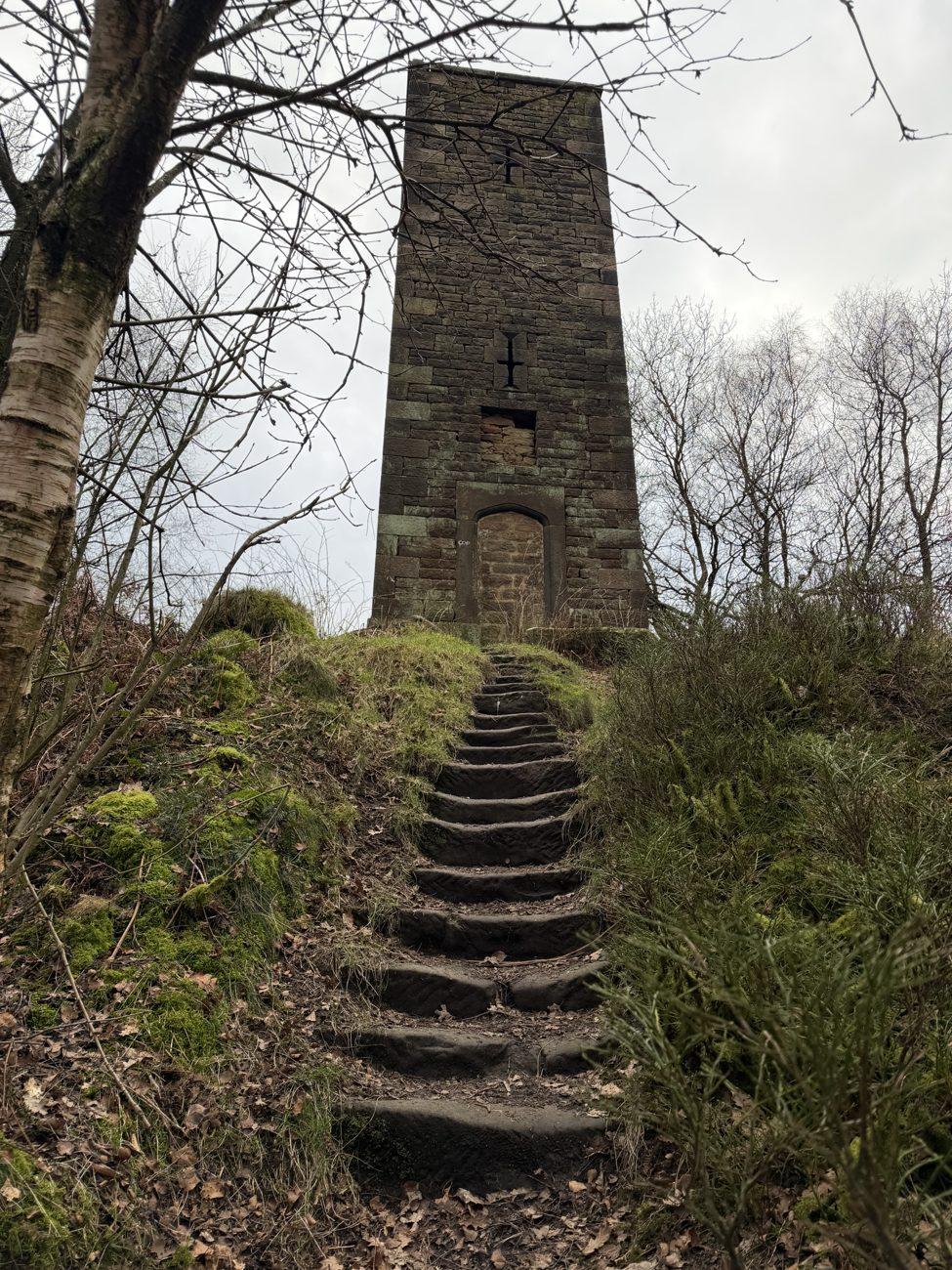
I thought about this in England’s Peak District, climbing the old stone steps up to the Reform Tower on Stanton Moor. It’s also called the Earl Grey Tower.
A local landowner built it in the 1830s to celebrate a political win. And as the story goes, he put it right where the neighbor who’d opposed him couldn’t miss it. (Talk about the neighbor’s lawn.)
Today you climb all those steps, get to the top, and the door is bricked shut.
All that climbing, and you can’t even get inside.
That’s the trap.
The fog isn’t always loud
I think we sometimes imagine subconscious blocks as dramatic. Fear. Self-sabotage. Big, obvious limiting beliefs.
But the fog can be much quieter.
It can sound like:
I’ll do that later.
This is just what this season requires.
Everyone else seems to be handling it.
I should be grateful.
I can’t change my mind now. I’ve already invested too much.
This is what success looks like.
Maybe I just need to try harder.
And suddenly, years have passed.
You’re living a life that makes perfect sense on paper. But something inside you keeps whispering:
This isn’t it.
Knowing isn’t always enough
This is one of the reasons I love subconscious work.
Because you can consciously know exactly what you want and still find yourself doing something completely different.
You can know you want more visibility and keep hiding. You can know you want to raise your prices and keep finding reasons not to. You can know you want to leave the relationship, the business model, the identity, the city, or the version of yourself that no longer fits, and still feel strangely unable to move.
That’s the gap I’m interested in. The gap between knowing and doing.
Your conscious mind can say I want this while something underneath is saying absolutely not.
And when those two parts aren’t aligned, you can spend an enormous amount of energy trying to force yourself forward. More discipline. More strategy. More accountability. More pushing. More figuring it out.
Sometimes what you actually need isn’t more effort. You need to understand what’s running underneath the effort.
(I wrote more about this in Why knowing better doesn’t change anything.)
What if you stopped calling it failure?
This is the part of “Babylon” that feels especially poignant to me.
The character eventually recognizes what he lost. But I don’t think the lesson is simply don’t chase success. It’s much more nuanced than that.
Success isn’t the problem. Ambition isn’t the problem. Wanting more isn’t the problem.
The question is whether the life you’re building is actually yours.
Because you can build something extraordinary from the fog. And you can also build something extraordinary from clarity.
Those two lives may look almost identical from the outside. They feel completely different from the inside.
One requires constant proving. The other has room to breathe.
How to start noticing the fog
Maybe the goal isn’t to get out of the fog overnight. Maybe it’s simply to start noticing it.
Ask yourself:
Where am I saying I want something because I genuinely want it?
Where am I saying I want it because I think I should?
What am I still chasing that belonged to an older version of me?
Whose definition of success am I working toward, and did I ever consciously choose it?
And perhaps most importantly:
What do I want instead?
That’s one of my favorite questions because it moves us out of the endless excavation of what’s wrong and toward something much more useful. Possibility.
You don’t have to retell your entire story to move forward. You don’t have to understand every reason you became who you became. And you don’t necessarily need to try harder.
Sometimes you simply need to get quiet enough to recognize that the thing you’ve been chasing isn’t actually where you want to go anymore.
Why this song is landing right now
I don’t think it’s an accident that one of the biggest artists in the world is putting out a song about this.
To me, it points to something bigger. Collectively, we’re chasing authenticity.
Millennials especially are stepping into this. A lot of us grew up with a pretty clear picture of what a good life was supposed to look like. The degree, the career, the house, the milestones in the right order.
And a lot of us did it. Now we’re stepping back and asking a different question:
Was any of this actually mine?
It’s a powerful question. It can also bring up a lot. Grief for the years spent climbing. Nostalgia for who you were before. Longing for the life you left behind to chase this one.
That’s normal. It doesn’t mean you’re going backward.
I call this part the Unbecoming. Once the fog starts to clear, you see what no longer fits, and it can feel murky for a while before it feels better.
What “Babylon” means to me
Maybe that’s what this song is really about.
Not that you chose the wrong life. Not that ambition was a mistake.
But that sometimes we don’t recognize the life we actually wanted until the fog lifts.
And when it does, you may discover something surprisingly simple:
You already know what you want. You just couldn’t see it clearly before.
Sometimes seeing the fog is the easy part. Letting go of it is harder.
And sometimes you need a little help to get to a true place of peace and non-attachment with the past, nostalgia included, so you can step into a life worth loving.
That’s the work I do.
If “Babylon” stirred something in you and you’re ready to start living the life that’s actually yours, you can book a private PSYCH-K® session with me.